
Coriander as a valuable spice
Hardly any other spice is as polarizing as cilantro. Some love its intense taste and smell, while others find both unpleasant. But how can cilantro be used?
Cilantro: seasoning for health
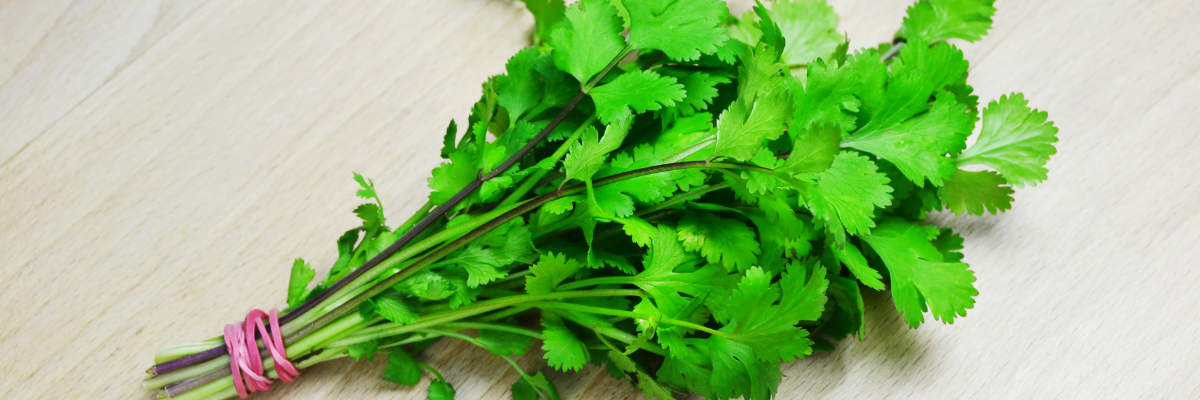
Cilantro is also known by the name Coriandrum sativum and originates from the Orient and Mediterranean countries. The plant can reach a height of between 30 and 80 cm. It is adorned with leaves of varying sizes and a cluster of pink or white flowers, which thrive best in sunny locations. There are two variants of Coriandrum sativum that bear fruits of different sizes. Coriandrum sativum L. var. vulgare ALEF bears fruits 3 to 5 mm in size, while the variant var. microcarpum DC bears fruits with a diameter of 1.5 to 3 mm. Only in Thailand are the roots also used. Cilantro is also frequently confused with fennel.
Cilantro: taste and smell
It is primarily the fresh leaves and dried seeds—in this case, the fruits of the cilantro—that are eaten. The above-ground parts of the plant smell like bedbugs when fresh, which is why cilantro is colloquially known as "stinkweed" (Wanzenkraut) in German. In a dried state, the scent is reminiscent of a spicy, lavender- and orange-like aroma. Europeans who find the taste of cilantro unpleasant often describe it as tasting like burnt rubber or soap. People who enjoy the aroma perceive a fresh, spicy, or citrusy taste. The fruits themselves are considered nutty and spicy in flavor. The taste of cilantro is very popular, especially outside of North America and Europe.
What is cilantro used for?
Cilantro is primarily used as a spice, especially in Asia, Latin America, North Africa, and Southern Europe in salads, chutneys, guacamole, salsa, or lentils. However, cilantro can also be found in the production of herbal liqueurs or perfumes. The leaves are generally added to the dish shortly before serving, as the flavor is quickly lost when heated. Furthermore, the herb is used as a carminative, antispasmodic, and stomachic. The essential oil extracted from it is also used for migraines. According to studies, cilantro is said to support the body in better excreting amalgam. The leaves and seeds of the cilantro also contain antioxidants, which help dishes stay fresh longer. Antioxidants contribute to protection against free radicals.
Cilantro is not only used as a spice but is also a component of our MetaFit. The formula combines cilantro with milk thistle, dandelion root, vitamin C from acerola, and choline. Choline contributes to the maintenance of normal liver function. MetaFit is vegan and suitable for a low-histamine, low-fructose, gluten-free, and lactose-free diet.


Cilantro for insomnia
In the Middle East, cilantro is used in traditional medicine. Areas of application include sleep disorders and anxiety. The herb contains the following ingredients:
- essential oils (camphor, coriander oil, linalool, borneol, geraniol, pinene)
- phenolic acids
- dodecenal
- coumarins
-
sterols
Cilantro can be taken as a tea before bedtime.

Cilantro and histamine
Cilantro is suitable for a low-histamine diet. On the SIGHI list, the herb is rated with a “0” on the compatibility scale. For people with histamine issues, this means that cilantro is well-tolerated in normal amounts. Nevertheless, one should pay attention to their personal tolerance threshold.
Would you like to discover more foods that fit your low-histamine diet? With our HistaStarter-Set, you will get to know a selection of popular HistaFood products that are suitable for a low-histamine diet. This allows you to try out different products and bring more variety into your low-histamine daily life.
Lieferzeit: 2-3 Tage


